Quick Links to Zahanas activities in Madagascar:
click on any image/issue below


Latest web page additions
- 2026 looking ahead: The medical clinic
- Celebrating 2025
- Improved Cookstove Report 2025
- Reforestation and celebration
- Reforestation 2.0
- Innovative bio-charcoal machine
- Zahana Cup 2024
- Trees Grow - and the boy who planted it
- Getting ready for the 23/24 school year
- Remembering the dream of a woman
- In Memoriam of Jean (12/23)
- What is the Zahana Cup?
- Seed balls for reforestation
- Vegetable Gardens in 2022
- Celebrating seed balls
- Rice bank revitalized
- Jean Zahana's Master Gardener
- Seed Balls
- Innovative pastry oven
- Bicycles for the road
- Hand cranck sewing machine
- Evaluating Reforestation
- Our third gardener
- Bicycles mean mobility
- Improved cookstove update
- CEPE once again in 2020
- School closure and COVID-19 Prevention
- Improved cookstoves
- Expaning tree nursery
- Innauguration: second school building
- Moringa trees in the school garden
- Clean and Safe Water in Fiarenana
- Solar cooked moringa noodle soup
- Award of Excellence for CARMMA
- First Baby born in the new CARMMA rooms
- Moringa in the school yard
- One man, one tree, 1000 Morings seeds
- Video: Moringa Leaves Omelette
- Planting a Moringa Forest in Madagascar
- Zahana 10th Anniversary
- Potato a new 'old' idea
- Participatory Development Explained
- A failure story with a happy end
- Awarding reforestation
- Int. Women's Day
- Breadfruit - solar cooked videos
- Solar Cooker Videos
- How to video: Build a school


Rice is vitally important to Madagascar, culturally and as its primary, most important food people like to eat (see the "Food" button above in the header).
Zahana is a community benefit organization in Madagascar dedicated to participatory rural development, education, revitalization of traditional Malagasy medicine, reforestation, and sustainable and environmentally friendly agriculture. It is Zahana’s philosophy that development must be based on local needs and solutions proposed by local people. Participatory development means asking communities what they need. To realize the community’s priorities, Zahana hires in-country experts to assist with specific tasks and buys supplies and materials the villagers are unable to afford. Villagers donate their labor and locally available materials to each project.
More background about GlobalGivings Green Challenge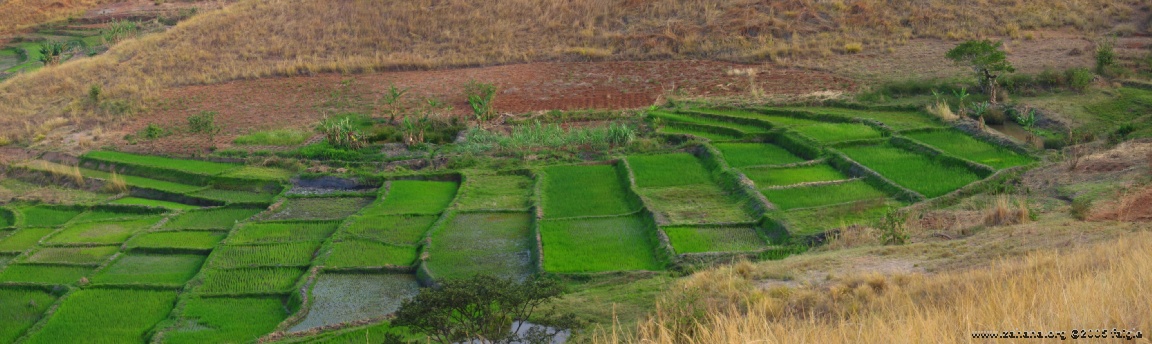
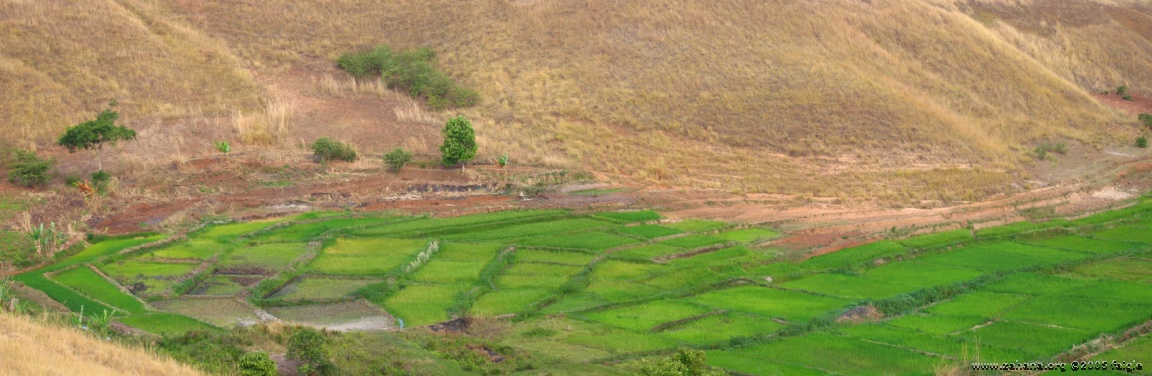
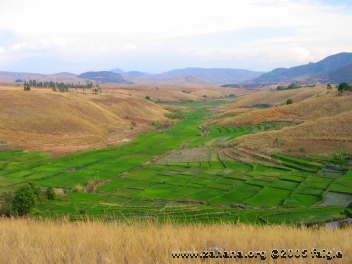
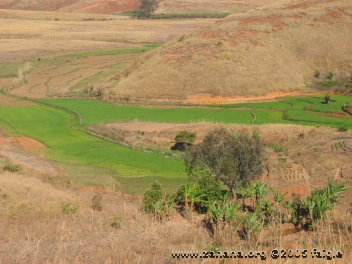
Rice fields are a common sight in Madagascar’s landscape. Where there is water, people grow rice. Many valley floors have rice paddies, often built in terraces like this one.
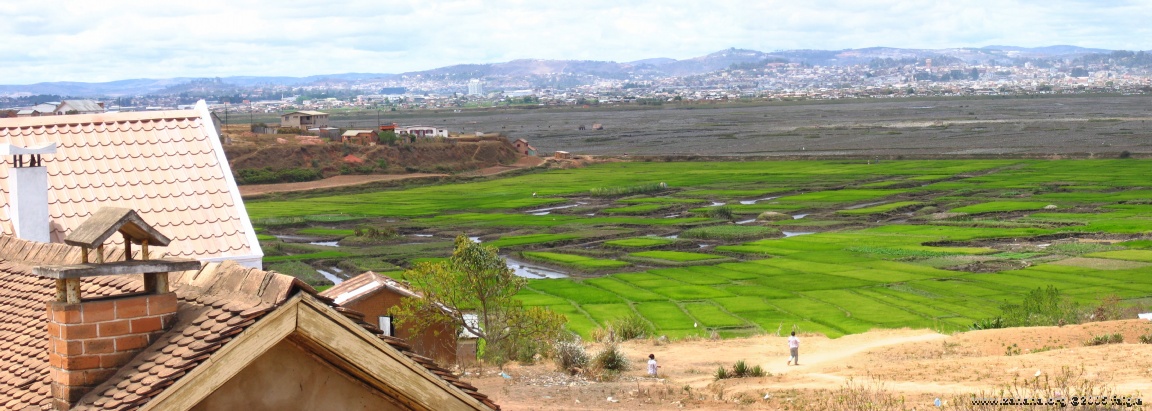
Even in the capital city of Antananarivo vast rice paddies can be found inside and surrounding the city. This picture was taken in one of the suburbs of Antananarivo.
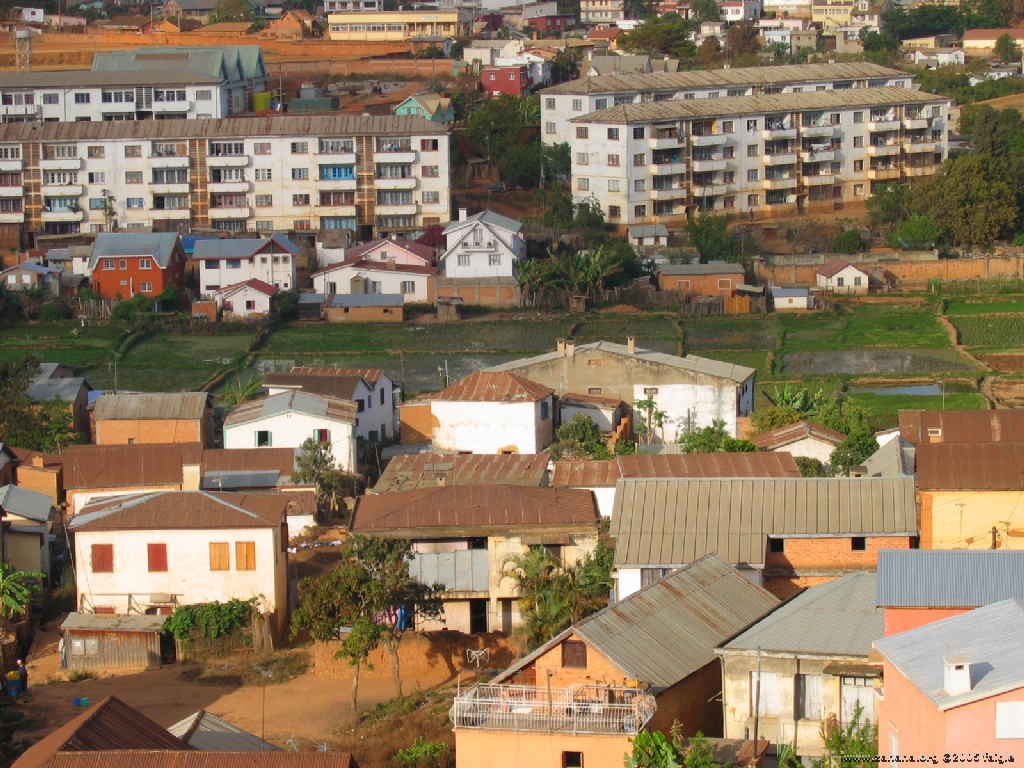
The city is built on a series of very steep hills with many valleys. In the center of the capital city of Antananarivo almost all valley bottoms are still used as agricultural fields. Often fed by natural spring water, these valley bottom areas have not been taken over yet by development, and are farmed growing crops like rice, taro, watercress or sweet potatoes.
Planting and Processing Rice in Madagascar
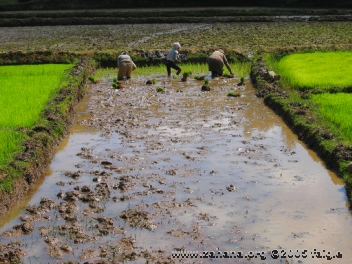
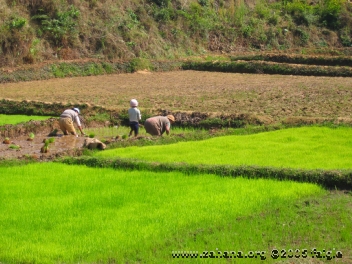
Rice as a crop is always grown in water. Source or river-fed rice paddies and rain-fed seasonal fields are planted and harvested by hand in Madagascar.
Preparing rice so it can be eaten
To separate the edible rice kernel from the shaft it needs to be pounded either by hand or treated in a mechanized rice mill. Rice pounded by hand is considered much tastier and flavorful in Madagascar and sold at a higher price in the markets. In these pictures from Fiadanana, all rice for personal consumption is pounded in a stone mortar by hand. This is the task of women and children. One person can pound up to two hours a day to get the rice ready for the family meal. Most villages in Madagascar still use manual pounding exclusively for the rice they grow and eat.
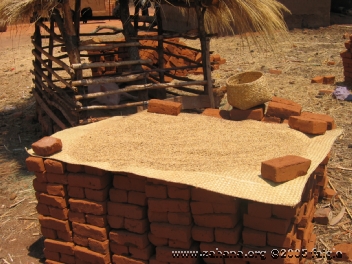
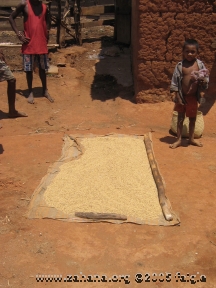
Drying rice on a mat in the sun prior to pounding it.
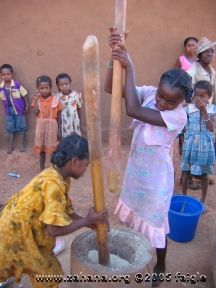
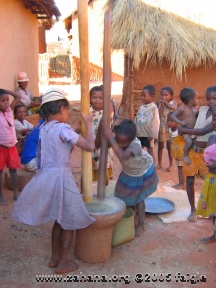
Girls pounding rice in stone mortars (in Fiadanana)
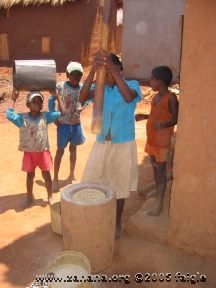
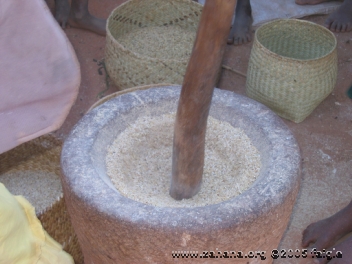
Girls pounding rice in stone mortars and close-up of stone mortar (in Fiadanana)
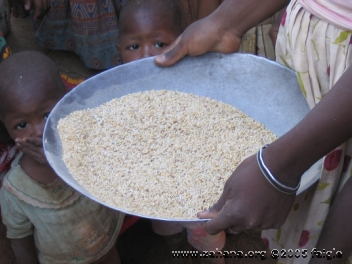
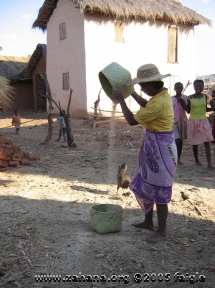
To separate the rice from the shaft it is either thrown in the air or poured from one vessel into another. This millennium old method separates the shaft from the edible kernel with the help of the wind. The lighter inedible shaft is blown away, while the much heavier rice kernel lands safely back in the intended container.
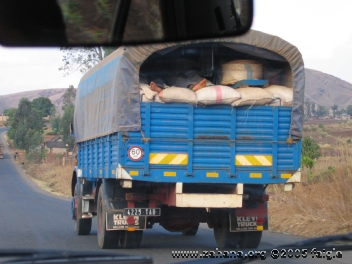 For people living in towns or cities who are not subsistence
farmers and do not grow their own rice, trucks are used to supply them
with the rice they need.
For people living in towns or cities who are not subsistence
farmers and do not grow their own rice, trucks are used to supply them
with the rice they need.
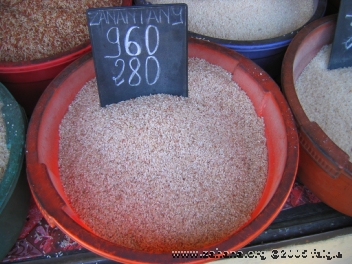
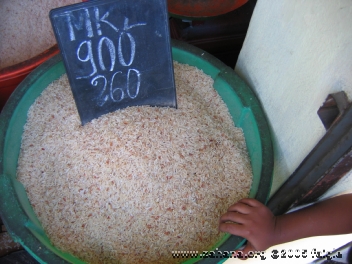
Different varieties of rice are grown in Madagascar and sold in the markets. Traditional varieties are much preferred by Malagasies and imported varieties of rice are considered much inferior in quality and flavor. Unfortunately Madagascar is not able anymore to produce all the rice they consume in their own country and has become a rice importing instead of a rice-exporting nation.
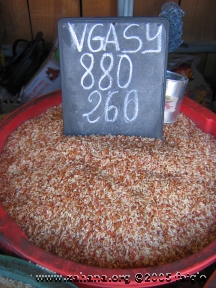
Rice is sold “by the cup” in the market, such as the metal tin cup behind the price sign. The can of the size used for unsweetened or sweetened condensed milk serves as a standardized measurement for many things sold in bulk in Madagascar. People might go out and buy one or two cups of rice for a meal, depending on what they can afford.
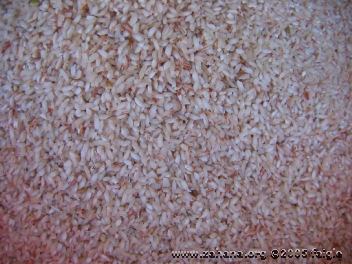
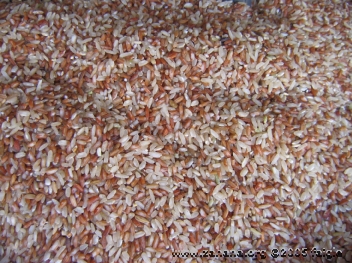
Close-up of two Malagasy rice varieties sold in the market.
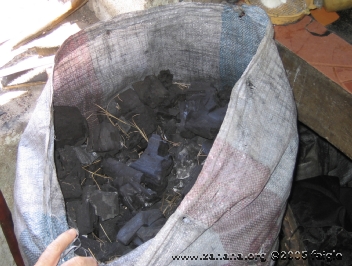
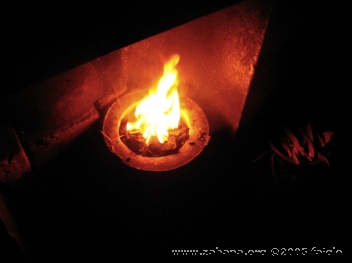
Charcoal or wood is used as the traditional cooking fuel in over 90% of the kitchens in Madagascar, including in the cities. For more information about cook stoves see our chapter “Improved cook stove technology as an environmental measure to preserve biodiversity and counteract deforestation”.
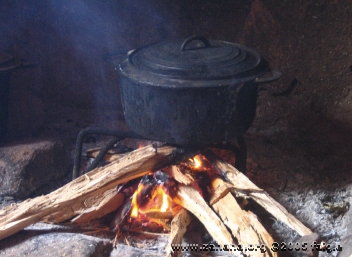
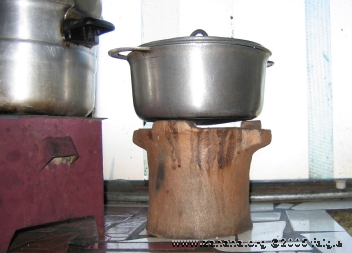
Left: Cooking rice over an open fire in the village of Fiadanana. Right: Cooking rice in a kitchen in Antananarivo, the capital city (right).
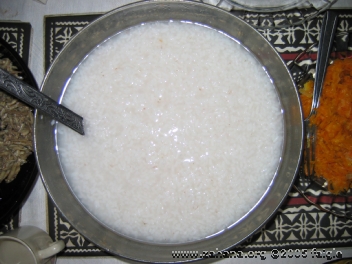
Most rice in Madagascar is eaten in a very watery consistency. Large amounts of rice are eaten in soup bowls together with a soup made of water and sweet potato leaves or cassava (manioc) leaves. This leafy soup is a staple normally eaten together with rice and most likely the only vegetable eaten with a meal. On special occasions small pieces of meat might be served as well.